


TMJ Dysfunction Physical Therapy
Posture Studio Physical Therapy take a whole-body care approach to jaw pain. This integrated approach supports lasting change and empowers each person to understand how to manage their own self-care.
Led by Rebecca Brown, DPT, our comprehensive physical therapy TMJD model considers the effects of posture, breathing, movement patterns, and nervous system regulation on jaw pain and dysfunction.
What is TMJ Dysfunction and what is your PT approach?
Temporomandibular Joint Dysfunction (TMJD) can show up as jaw pain, clicking or popping, headaches, facial tension, neck discomfort, or difficulty opening and closing the mouth comfortably. While these symptoms are felt locally, the jaw is deeply connected to posture, breathing, and how the body moves as a whole.
At Posture Studio, we treat TMJD through a whole-body physical therapy approach—looking beyond the jaw to understand what’s contributing to the strain.
The jaw is part of a larger system.
The position of the head, neck, and shoulders plays a significant role in how the jaw functions. Forward head posture, chronic neck tension, or upper-body stiffness can subtly change how the jaw moves and loads over time, increasing stress on the joint and surrounding muscles.
The jaw, torso and pelvis
The jaw is also connected to the pelvis through the spine, breathing mechanics, and the nervous system. Patterns of holding or tension in the pelvis and core, often related to stress, posture, or injury, can influence jaw tension. Similarly, chronic jaw clenching can reflect broader patterns of muscular holding throughout the body.
For this reason, TMJD therapy often includes looking at how the pelvis, rib cage, and core support the head and neck, and how efficiently the body is breathing and moving.
How physical therapy helps
TMJD-focused physical therapy at Posture Studio may include:
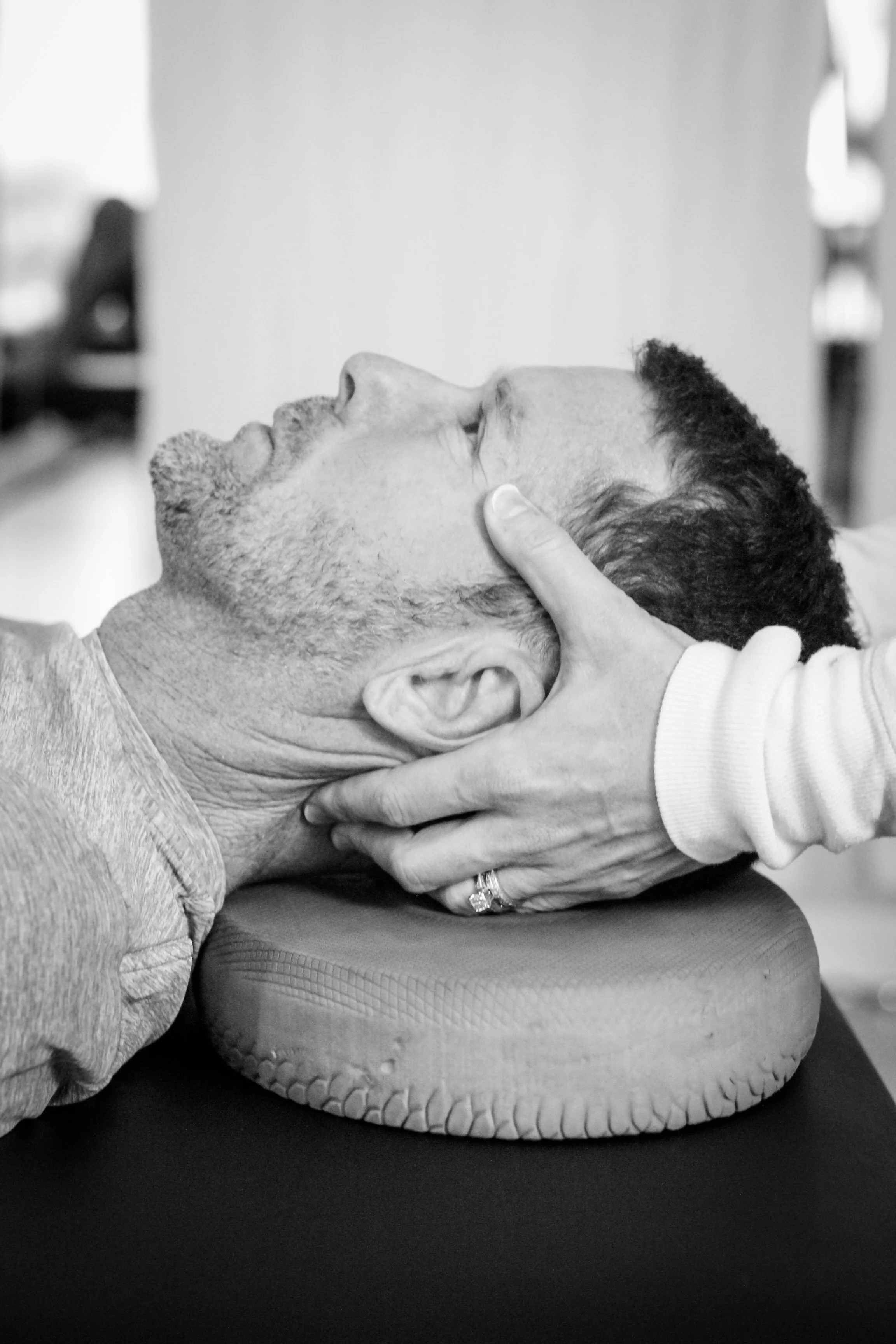
Gentle hands-on treatment to the jaw, neck, and upper spine
Soft tissue work to reduce facial, neck, and shoulder tension
Joint mobilization to support healthy jaw and cervical movement
Postural retraining from head through pelvis
Breathing and movement strategies to reduce habitual holding
Education to support long-term change, prevent recurrence and to provide independent management of symptoms.
When TMJD is addressed in the context of posture, breathing, and whole-body movement, people often notice improvements not only in jaw pain, but also in headaches, neck tension, and overall comfort in daily life.